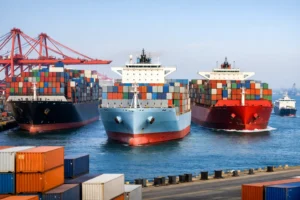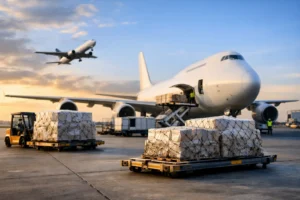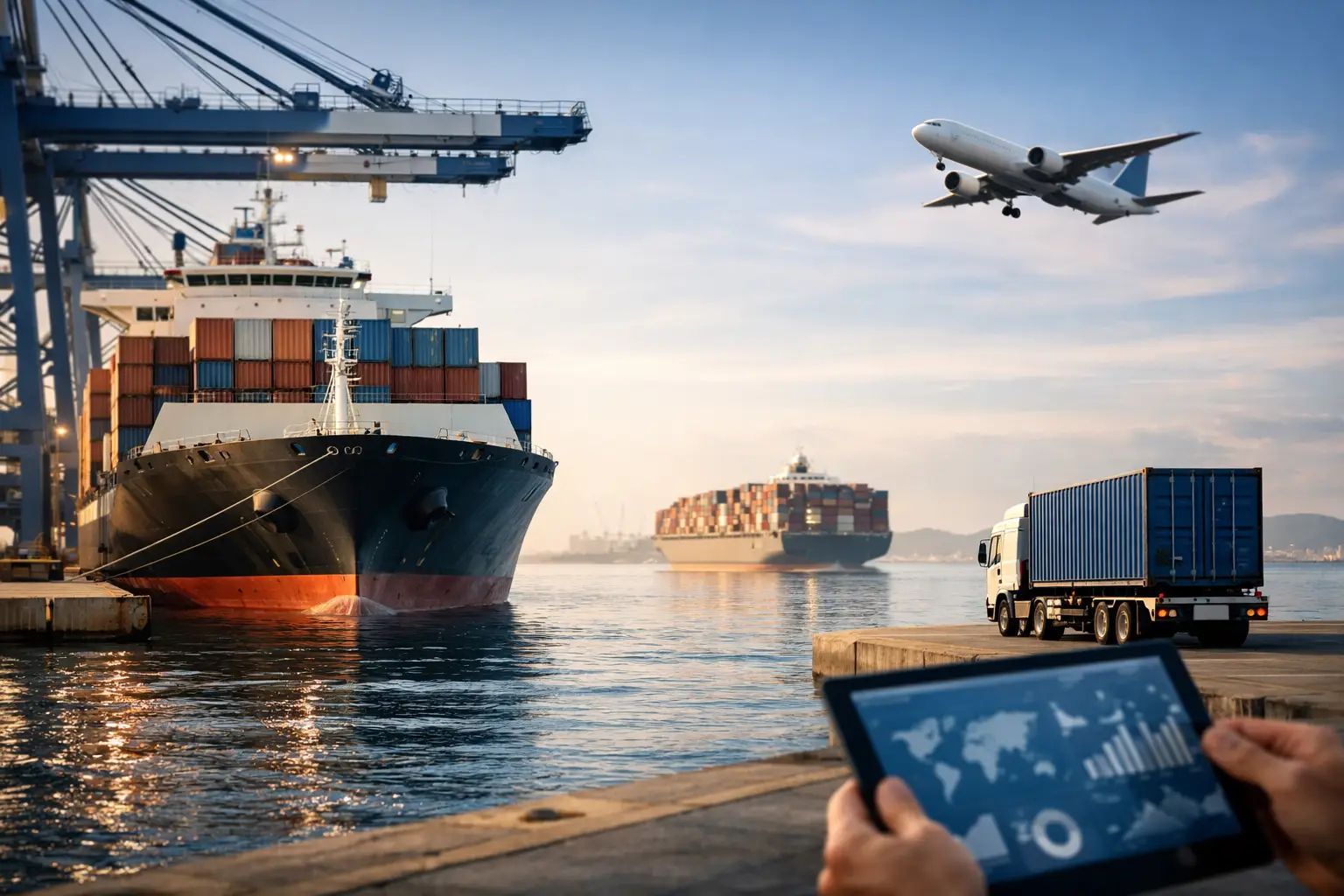
When a shipment is too large for express service and too cost-sensitive for air freight, sea cargo logistics becomes a business decision, not just a transport option. For importers, exporters, distributors, and manufacturers, it is often the mode that protects margin while keeping international supply moving at scale.
The value of sea cargo is straightforward. It gives businesses access to global trade lanes, better cost efficiency per unit, and the capacity to move heavier or higher-volume goods without forcing freight spend too high. But cost alone is not the reason companies choose it. The real advantage comes from planning, coordination, and execution across multiple handoff points, from origin pickup to port handling, customs, and final delivery.
What sea cargo logistics actually covers
Sea cargo logistics refers to the end-to-end management of ocean freight shipments. That includes more than booking space on a vessel. It starts with shipment planning, container selection, and documentation, then continues through port operations, customs processes, cargo tracking, and inland delivery at destination.
For businesses, the challenge is that each stage affects the next. A minor documentation issue at origin can delay loading. Poor container planning can lead to avoidable cost. Weak coordination between ocean transport and local delivery can create delays even when the vessel arrives on time. That is why sea freight performance is rarely defined by the vessel alone. It is defined by how well the full movement is managed.
This matters even more for companies shipping on recurring schedules. If inventory planning depends on inbound containers arriving within a workable window, logistics reliability becomes part of procurement, sales fulfillment, and customer service. Sea cargo is slower than air, but it should never be unmanaged.
Why businesses choose sea cargo logistics
The first reason is economics. For larger consignments, ocean freight usually offers a much lower transportation cost per kilogram or per cubic meter than air freight. That makes it suitable for bulk cargo, palletized goods, industrial materials, retail replenishment, and non-urgent commercial inventory.
The second reason is capacity. Sea freight can support full container loads, oversized goods, and consolidated shipments that would be impractical or expensive by faster modes. If your business moves regular volumes across regions, ocean freight often becomes the base layer of the supply chain.
The third reason is flexibility in planning. Sea shipping works well when businesses forecast demand, align ordering cycles, and build transport lead time into purchasing decisions. It is not ideal for every shipment, but it can be highly effective when used with discipline.
That said, there is always a trade-off. Lower freight cost usually comes with longer transit times and less room to absorb mistakes. If demand is unpredictable or stock levels are already tight, the savings from sea cargo can disappear quickly if delays trigger stockouts or emergency air shipments.
Sea cargo logistics works best when timing is planned early
Ocean freight rewards businesses that plan ahead. The earlier shipment requirements are defined, the more control there is over routing, booking windows, equipment availability, and destination coordination.
This is where many shipping issues begin. A company may make the right mode decision by choosing sea freight, then lose the benefit through late booking, incomplete paperwork, or poor communication between supplier, forwarder, and receiving team. The result is avoidable detention, rolled cargo, customs delays, or missed delivery appointments.
For SMEs and growing companies, this often happens because sea cargo is treated as a simple purchase rather than an operating process. In practice, it touches procurement timelines, warehouse readiness, landed cost planning, and customer commitments. The companies that manage it well usually have a clear shipment calendar, realistic lead times, and one logistics partner coordinating the movement across borders.
FCL and LCL in sea cargo logistics
One of the first decisions in sea cargo logistics is whether the shipment should move as FCL or LCL. Full Container Load means one shipper uses the container. Less than Container Load means multiple shipments are consolidated into shared container space.
FCL is often the better choice when shipment volume is high enough to justify the container or when cargo control matters more than maximum consolidation savings. It can reduce handling points, improve cargo security, and offer more predictable movement because the shipment stays together from loading to destination.
LCL is useful when volume does not support a full container. It gives smaller businesses access to sea freight without waiting to build larger shipment size. That can improve cash flow and inventory flexibility, especially for companies testing markets or shipping mixed quantities.
The trade-off is speed and handling complexity. LCL often involves more consolidation and deconsolidation work, which can add time and increase the number of touchpoints. If the shipment is high value, fragile, or time-sensitive within a narrow window, the apparent savings may not always outweigh the operational risk.
Documentation and customs are part of the service, not admin work
In international shipping, documentation is operational control. Commercial invoices, packing lists, bills of lading, permits, and customs declarations all affect whether cargo moves on schedule. Errors here are not minor. They can trigger inspections, fines, release delays, or rework at origin and destination.
Strong sea cargo logistics depends on getting these details right before the shipment reaches the port. That means verifying cargo descriptions, shipment values, country-of-origin details, packaging counts, and consignee information early. It also means making sure the shipment structure matches the import requirements of the destination country.
For business customers, this is where a dependable freight partner adds real value. The role is not just to move cargo. It is to help reduce preventable delays by aligning shipping documents, transport planning, and customs readiness before the freight enters the critical path.
Visibility matters even more with longer transit times
Because ocean freight moves on longer timelines, shipment visibility matters. Businesses need to know when cargo is booked, loaded, departed, transshipped, arrived, cleared, and released for delivery. Without that visibility, planning becomes reactive.
This is especially important for companies managing production inputs, retail restocking, or order fulfillment commitments. A few days of uncertainty can affect warehouse labor, customer communication, and downstream transport scheduling. Reliable updates help teams make decisions early rather than chasing information after a delay has already caused problems.
Visibility should also be practical. Businesses do not just need vessel milestones. They need meaningful shipment coordination, including notice of documentation issues, customs holds, and final-mile delivery timing. Good freight management turns tracking into action.
Choosing the right partner for sea cargo logistics
Not every logistics provider manages sea cargo at the same standard. Some can secure freight space but provide limited coordination after booking. Others offer broader support across origin handling, customs, destination delivery, and shipment monitoring.
For commercial shippers, the right partner should understand cargo profile, trade lane requirements, and service expectations. That includes advising when sea freight is the right fit and when another mode may better protect the business outcome. A premium logistics partner should be able to support ocean freight as part of a wider shipping strategy, not as an isolated transaction.
This matters when businesses need flexibility. A company may use sea freight for regular replenishment, air freight for urgent exceptions, and express service for samples or critical documents. Working with one provider that can coordinate across these modes reduces handoff risk and simplifies communication. For many businesses shipping from Malaysia to international destinations, that multi-mode capability is what turns freight from a recurring problem into a managed function. That is the standard Cargovia is built to support.
When sea cargo logistics is the wrong choice
Sea freight is not automatically the most efficient option. If the goods are urgently needed, highly perishable, extremely high value relative to size, or tied to a tight launch window, slower transit may create more cost elsewhere in the business.
It can also be a poor choice when internal planning is weak. If purchase orders are late, forecasts change constantly, or receiving facilities cannot handle the timing of container arrivals, ocean freight may expose process issues rather than solve them. In those cases, the better answer may be a mixed-mode strategy rather than forcing all shipments into one model.
The smartest shipping decisions usually come from matching mode to business need. Sea cargo is strongest when cost control, volume, and planned lead times are the priority. It becomes even more effective when supported by reliable documentation, clear visibility, and coordinated execution across the full shipment journey.
For businesses moving commercial freight internationally, sea cargo logistics is not just about getting goods on the water. It is about building a shipping structure that stays dependable as volumes grow, markets shift, and delivery expectations get tighter.