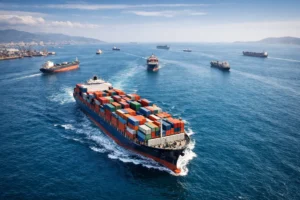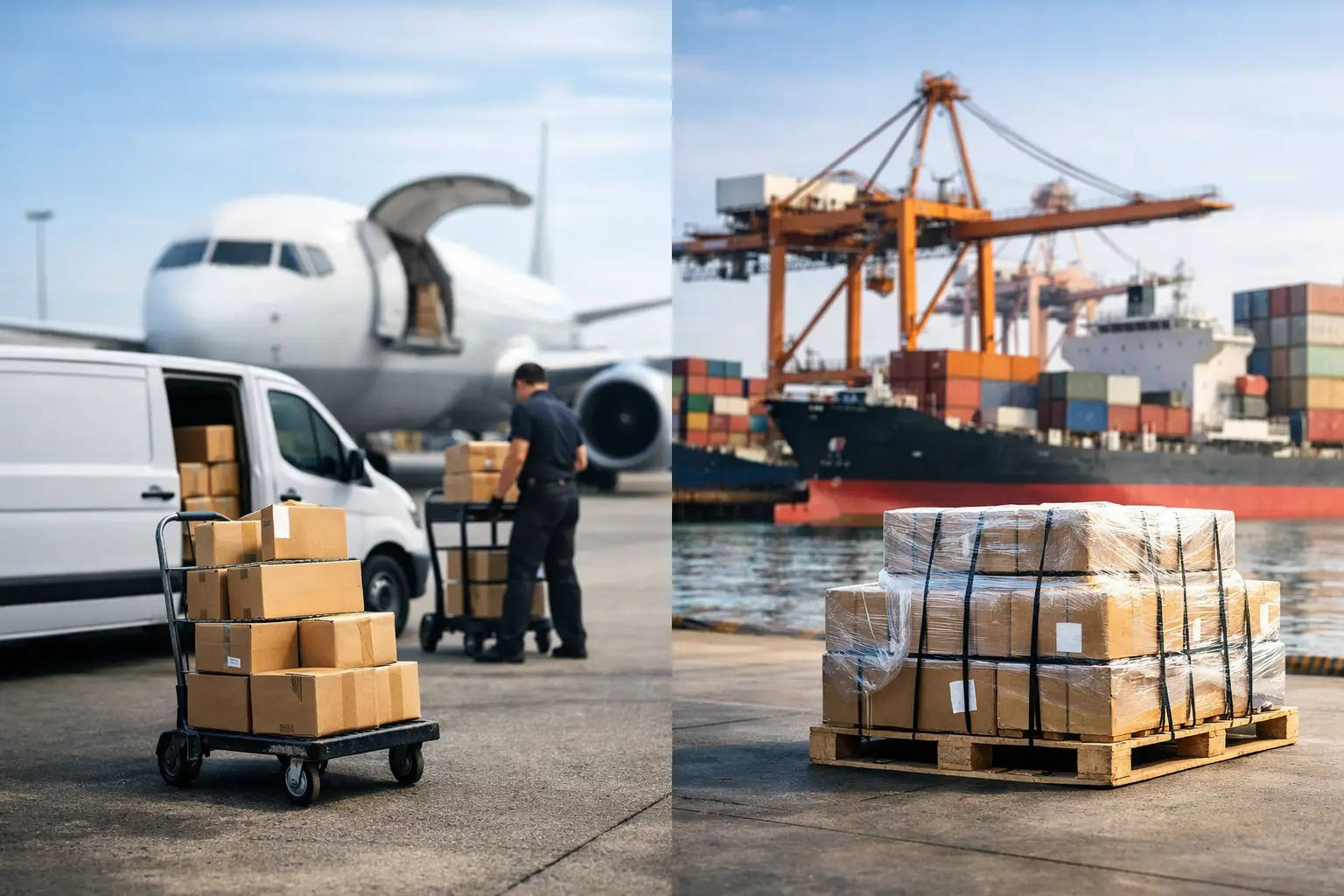
A production line waiting for a replacement part, a retailer replenishing fast-selling inventory, and a manufacturer moving palletized cargo may all ship internationally. Yet the right transport solution is different in each case. The decision between express shipping vs freight forwarding affects delivery speed, shipping cost, shipment visibility, customs handling, and the amount of coordination required from your team.
Express shipping is built for urgent, smaller shipments that need predictable door-to-door transit. Freight forwarding is built for businesses moving larger, more complex, or recurring international cargo that benefits from coordinated air, sea, and ground transport. Neither option is automatically better. The best choice depends on what is being shipped, how quickly it must arrive, and what a delay would cost the business.
Express Shipping vs Freight Forwarding: The Core Difference
Express shipping is a courier-based service designed for speed and simplicity. International express providers use integrated networks to collect parcels, move them through air hubs, clear customs, and deliver to the final address. Tracking is generally detailed, transit times are comparatively short, and service is commonly door to door.
Freight forwarding is a logistics service that plans and coordinates cargo movement on behalf of the shipper. A freight forwarder may arrange air freight, ocean freight, road transport, customs clearance, cargo consolidation, warehousing, and final delivery. Rather than relying on one fixed courier network, the forwarder selects the transport method and routing that best suits the shipment.
This distinction matters because freight forwarding is not simply a slower version of express shipping. It is a broader operational model. A forwarder can arrange urgent air freight when time is critical, but can also build a lower-cost sea freight plan for containerized cargo or recurring volume shipments.
When Express Shipping Is the Right Choice
Express shipping works best when urgency outweighs the higher cost per pound. It is commonly used for documents, prototypes, samples, replacement parts, small e-commerce orders, and compact high-value products.
For a business shipping from Malaysia to the United States, express transit may be measured in business days rather than weeks. That speed can protect a customer relationship, avoid equipment downtime, or keep a product launch on schedule. The service is also attractive when internal teams need minimal involvement after pickup. The carrier typically manages the main transport journey, provides milestone tracking, and delivers directly to the consignee.
Express is particularly practical when shipment dimensions and weight remain within courier-friendly limits. A box of product samples or several cartons of urgent components can move efficiently through an express network. The process becomes less favorable as cargo becomes heavier, bulkier, or more difficult to handle.
The main trade-off is price. Express rates reflect priority handling, dedicated networks, rapid transit, and dimensional weight calculations. A lightweight but oversized carton may be charged according to the space it occupies rather than its actual weight. For regular commercial shipments, those costs can rise quickly.
Express shipping is usually best for urgent parcels
Choose express when a shipment has a firm, near-term delivery requirement; the cargo is relatively small; and direct delivery matters more than achieving the lowest freight cost. It is also suitable when the recipient expects frequent tracking updates and a clear estimated delivery date.
That does not mean every urgent shipment should go by express. A larger shipment may be better served by priority air freight arranged through a forwarder, especially when it consists of multiple pallets or requires special coordination at origin or destination.
When Freight Forwarding Delivers More Value
Freight forwarding becomes more advantageous as shipment size, frequency, and operational complexity increase. It is the typical choice for commercial cargo such as machinery, retail inventory, industrial materials, components, and full pallet shipments.
A freight forwarder evaluates the cargo profile and determines whether air freight, sea freight, consolidated cargo, or a combination of modes provides the right outcome. This gives businesses more control over the speed-cost balance. A shipment that does not need to arrive immediately may move by ocean freight at a substantially lower cost than express or air transport. Cargo requiring faster movement, but too large for a courier service, can move as air freight.
Forwarding also provides greater flexibility for non-standard shipments. Pallets, crates, oversized items, higher volumes, and cargo requiring careful documentation often need more than a standard parcel label and courier collection. A forwarder can coordinate pickup, export procedures, airline or shipping line bookings, customs entries, and destination delivery requirements.
For SMEs with repeat export or import activity, this coordination reduces the burden of managing separate parties for different legs of the journey. Instead of treating every shipment as an isolated transaction, the business can establish a transport approach based on its regular lanes, inventory cycles, and customer commitments.
Freight forwarding is not always slow
Ocean freight has longer transit times, particularly when port handling and inland delivery are included. However, freight forwarding itself is not synonymous with slow shipping. Air freight is often a strong option for cargo that needs to move quickly but is too heavy or voluminous for express service.
The real question is whether your shipment needs an express courier network or a tailored air freight plan. A freight forwarder can often provide more appropriate handling for commercial quantities while maintaining time-definite coordination around flight schedules, customs documentation, and delivery arrangements.
Compare Speed, Cost, Capacity, and Control
The most useful way to compare express shipping and freight forwarding is to assess four operational factors: delivery deadline, cargo size, total landed logistics cost, and service requirements.
Speed: Express shipping generally offers the fastest standard option for small international shipments. Freight forwarding offers more speed options, from priority air freight to scheduled ocean services. If a delivery must arrive within a few business days, express is often the starting point. If the deadline is less immediate, forwarding creates more choices.
Cost: Express has a higher rate per pound or kilogram, especially for dimensional cargo. Freight forwarding can reduce transportation costs for palletized or high-volume shipments, particularly through consolidation or ocean freight. However, freight quotes should be assessed on the full scope of service. Pickup, handling, documentation, customs clearance, storage, and final delivery can all affect the total cost.
Capacity: Express networks are ideal for parcels and smaller carton shipments. Freight forwarding is designed to accommodate growing volume, from consolidated shipments to full container loads. It also supports cargo that cannot be handled efficiently through a standard courier network.
Control: Express services are standardized, which makes them straightforward but less flexible. Freight forwarding provides greater room to specify routing, pickup arrangements, packing needs, cargo readiness dates, and delivery requirements. That control is valuable when shipments involve commercial invoices, packing lists, permits, special handling, or multiple suppliers.
Customs and Documentation Need Equal Attention
Fast transit does not eliminate customs requirements. Whether cargo moves by express or through a freight forwarder, inaccurate declarations can create delays, inspections, penalties, or unexpected charges.
Express carriers commonly guide shippers through standard documentation for routine parcel shipments. This is efficient when product descriptions, values, harmonized codes, and consignee details are clear. For more complex commercial freight, forwarding support becomes more valuable. A forwarder can help coordinate the documentation needed for the selected transport mode and destination requirements.
Businesses should avoid describing goods vaguely on commercial invoices. Terms such as “samples,” “parts,” or “accessories” without a precise product description can lead to questions during customs review. Include what the goods are, their intended use, country of origin where required, declared value, quantity, and correct commodity classification.
For regulated goods, batteries, temperature-sensitive products, hazardous materials, food items, or equipment subject to permits, confirm eligibility before cargo is collected. Choosing the fastest shipping method will not resolve a compliance issue at the border.
Build the Decision Around the Cost of Delay
The lowest freight rate is not always the lowest business cost. If a delayed component stops production, if a missed delivery damages a key account, or if inventory stockouts result in lost sales, premium transport may be justified. Express shipping can be the right commercial decision even when its quoted price is higher.
At the same time, relying on express services for planned replenishment can signal a supply chain problem. When inventory is predictable, freight forwarding allows businesses to schedule air or ocean cargo earlier and control logistics spending more effectively. Many organizations use both methods: freight forwarding for regular inventory movement and express shipping for exceptions, urgent replacements, and small priority orders.
Cargovia supports this kind of transport planning by providing express shipment, premium air freight, and sea cargo options under one coordinated logistics partner. The benefit is not simply access to different services. It is the ability to select the mode that matches the commercial requirement for each shipment.
Before booking, define the delivery deadline, confirm the shipment’s actual and dimensional weight, review the destination’s customs requirements, and calculate the business impact of late arrival. The right shipping decision is the one that protects your delivery commitment without paying for speed your cargo does not need.