A shipment from Malaysia to Europe can look straightforward on paper until congestion hits a major port, a carrier changes its rotation, or inland delivery misses a connection window. That is why global shipping routes matter far beyond geography. For importers, exporters, and supply chain teams, these routes directly affect freight cost, transit time, inventory planning, and customer commitments.
Why global shipping routes matter to business shippers
Global shipping routes are the established trade lanes that connect production centers, ports, airports, and end markets across regions. They are shaped by commercial demand, port infrastructure, customs efficiency, carrier capacity, and geopolitical conditions. In practice, they determine whether cargo moves through the shortest path, the most economical path, or the most reliable one.
For businesses, the key issue is not simply where a route goes. It is how that route performs under real operating conditions. A lane with low headline rates may come with longer dwell times, more transshipment risk, or less schedule reliability. A premium route may cost more, but it can protect delivery deadlines, reduce stockouts, and support tighter sales cycles. The right route depends on the value of the cargo, the urgency of the shipment, and the tolerance for delay.
The main global shipping routes businesses rely on
The world’s major trade lanes connect Asia with North America, Europe, the Middle East, and regional Asian markets. For companies shipping from Southeast Asia, these corridors are especially important because they carry a large share of manufactured goods, industrial components, consumer products, and e-commerce freight.
Asia to Europe
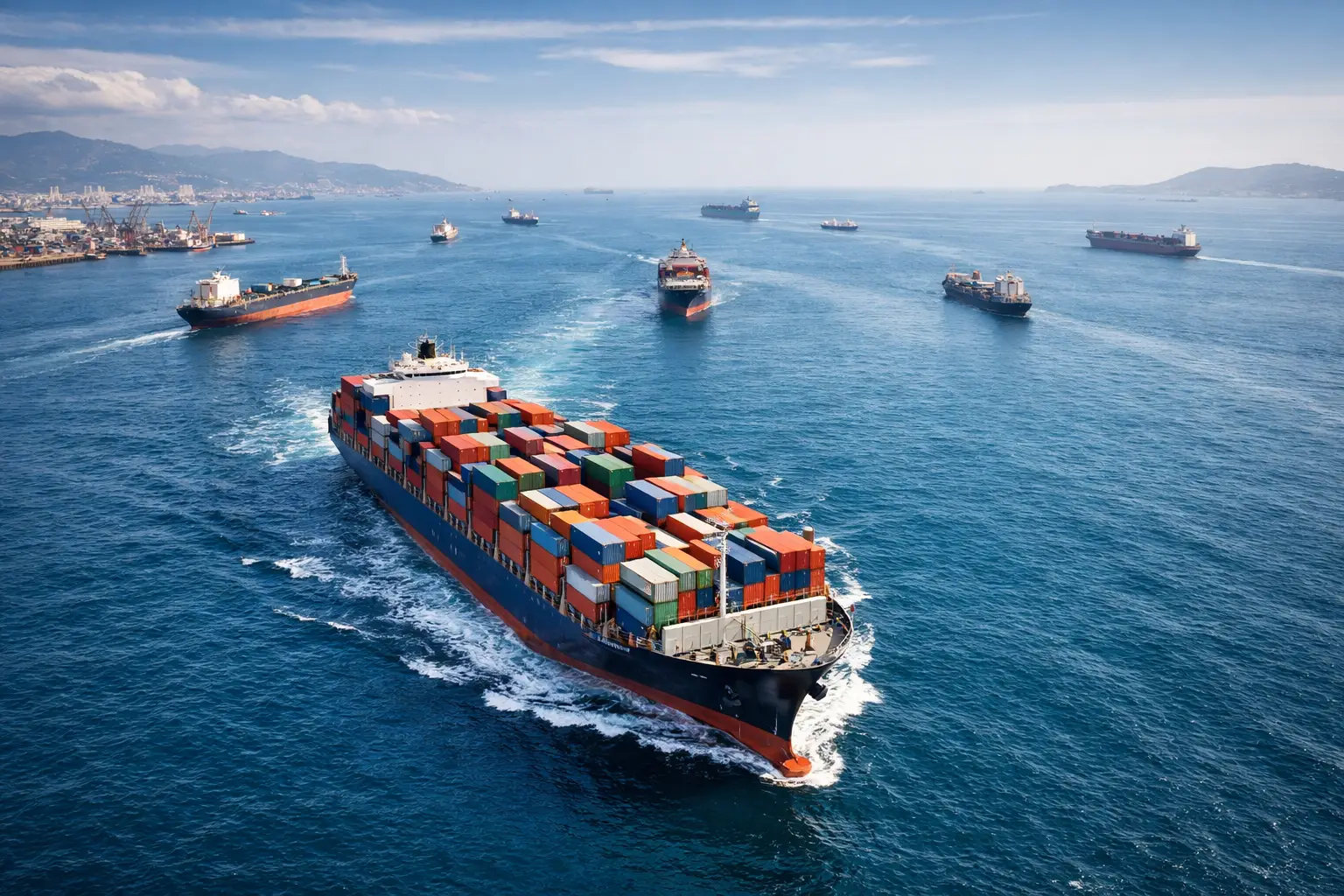
This is one of the most significant container trade lanes in the world. Cargo commonly moves through the Strait of Malacca, across the Indian Ocean, and toward the Suez Canal before reaching European ports. For many businesses, this route offers a practical balance between cost and market reach, especially for full container and consolidated sea freight.
Its strength is scale. Carriers deploy regular sailings, and major ports on both ends are built to handle high cargo volumes. Its weakness is exposure to disruption at key chokepoints. Delays in the Suez Canal, labor pressure at destination ports, or weather-related backlog can quickly affect transit schedules.
Asia to North America
Cargo moving from Asia to the United States generally follows either the Transpacific route to the West Coast or services that reach the East Coast through canal transits and inland rail networks. The best option depends on final destination, budget, and service expectations.
For urgent retail replenishment or time-sensitive manufacturing inputs, speed may justify premium ocean services or air freight alternatives. For planned inventory movements, standard sea cargo remains the more cost-efficient option. The trade-off is predictable: lower freight cost usually comes with longer lead times and a higher need for inventory buffer.
Intra-Asia routes
Regional Asian routes are critical for businesses with supplier networks spread across China, Malaysia, Singapore, Thailand, Vietnam, Indonesia, and beyond. These lanes support short-haul distribution, component sourcing, and frequent replenishment cycles.
Intra-Asia shipping can be faster and more flexible than long-haul freight, but it still depends heavily on port productivity, customs coordination, and feeder vessel schedules. Companies often underestimate these lanes because the distances are shorter. In reality, missed cutoffs and poor documentation can cause the same operational problems seen on larger global trades.
Asia to the Middle East and Africa
These routes are increasingly important for companies serving growth markets, project cargo demand, and industrial sectors. They often involve a mix of direct and transshipment services, depending on destination port coverage.
The opportunity here is commercial expansion into developing markets. The challenge is that service frequency, inland infrastructure, and customs practices can vary widely by country. Route planning on these lanes requires more than a rate comparison. It requires a clear understanding of destination handling conditions and final-mile execution.
How route selection affects cost, speed, and reliability
A global trade lane is not a single fixed path. It is a network of carrier schedules, hubs, transshipment points, and inland delivery stages. That is why choosing a route is really about choosing a service profile.
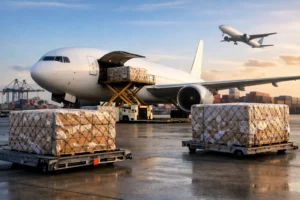
If speed is the priority, air freight often becomes the right answer, especially for high-value goods, launch inventory, spare parts, or delayed purchase orders. Air routes bypass many of the constraints of ocean shipping, but the cost structure is significantly higher. That makes air freight commercially sensible for some cargo and difficult to justify for others.
If cost efficiency matters most, sea cargo remains the preferred mode for larger or less urgent shipments. Yet cheaper freight rates do not always mean lower total landed cost. A slower route can increase warehousing pressure, extend cash conversion cycles, and raise the risk of missed sales windows. For many SMEs, those indirect costs can outweigh the savings on freight.
Express shipping sits between those needs for smaller commercial shipments that require faster international movement without the complexity of full freight planning. It works well for samples, urgent documents, replacement items, and lower-volume time-sensitive cargo.
Chokepoints that influence global shipping routes
Some routes are valuable because they shorten distance. Others matter because there are few practical alternatives. This is most visible at major maritime chokepoints such as the Strait of Malacca, the Suez Canal, and the Panama Canal.
When one of these corridors faces restrictions, the impact spreads quickly across carrier schedules and freight pricing. Rerouting may add days or weeks to transit time. Equipment shortages can follow. Booking space becomes harder to secure. For shippers, this means route planning should always account for contingency, not just the standard schedule shown at booking.
Port congestion creates a similar effect. Even when the vessel route itself remains open, terminal delays can disrupt the entire shipment timeline. A reliable logistics partner watches these conditions closely and adjusts mode, sailing choice, or delivery planning before the disruption reaches the customer.
Sea, air, or express: matching the mode to the route
The most effective shipping strategy is rarely about choosing one mode for everything. It is about matching the shipment to the route and the business outcome.
Sea cargo is best suited to planned volume movements, cost-controlled replenishment, and cargo that can tolerate longer transit windows. It supports containerized freight efficiently, especially on stable long-haul routes with strong port infrastructure.
Air freight is the right fit when delay carries a high commercial penalty. That includes production stoppages, promotional inventory, medical-related goods, electronics, and high-value cargo with strict delivery windows. It costs more, but it can protect revenue and service performance.
Express services are practical for lightweight, urgent, and smaller commercial shipments where speed and simplicity matter. They are often used to keep projects moving while larger freight follows on a more economical schedule.
For many businesses, the smartest approach is a combination. Critical items move by air or express. Bulk inventory follows by sea. That blended model improves resilience without pushing the full logistics budget into premium territory.
What businesses should review before booking a route
Before confirming any shipment, decision-makers should look beyond origin and destination. Carrier frequency matters because limited sailings reduce flexibility. Transshipment exposure matters because every extra handling point adds delay risk. Port and airport performance matter because infrastructure quality affects schedule reliability. Customs readiness matters because good routing can still fail if documents are incomplete or product controls are not addressed early.
It also helps to review the route in the context of the business cycle. A product launch, quarter-end shipment, or seasonal inventory push may require a different routing strategy than routine monthly replenishment. The best route in one month may be the wrong one in the next.
This is where an experienced freight partner adds value. Rather than quoting a shipment in isolation, the right provider aligns route, mode, and timing with the customer’s commercial priorities. For B2B shippers moving goods internationally from Malaysia, that level of coordination can make the difference between a shipment that merely moves and one that supports the business plan.
Cargovia works in that space by helping companies balance premium air freight, sea cargo, and express options across active trade lanes, with a stronger focus on reliability than rate alone.
Global shipping routes are changing
Trade lanes are not static. Manufacturing shifts, regional sourcing strategies, climate-related disruption, capacity swings, and geopolitical pressure all reshape routing decisions over time. Businesses that once relied on one standard lane are now building more flexible shipping plans with backup ports, alternate modes, and different transit expectations.
That does not mean every company needs a complex logistics model. It means route decisions should be made with current market conditions in mind, not old assumptions. The route that looks efficient on a map may not be the route that performs best for your cargo this quarter.
For businesses shipping internationally, the practical question is simple: does the route support your service promise, inventory needs, and cost targets at the same time? If not, the route needs to change before the shipment does.