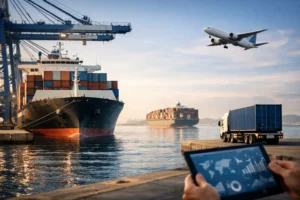
When a shipment misses a production window, the problem is rarely just transportation. It affects inventory planning, customer commitments, cash flow, and internal teams that now have to manage exceptions instead of normal operations. That is why global freight solutions matter to growing businesses. They are not simply about moving cargo from one country to another. They are about building a shipping model that supports deadlines, protects margin, and gives decision-makers better control.
For SMEs and corporate shippers, the real challenge is not finding a carrier. It is coordinating the right freight mode, transit schedule, documentation, customs handling, and delivery sequence across multiple markets. A business may need urgent air freight for one order, cost-efficient sea cargo for another, and express service for samples or replacement parts. Managing those needs through separate providers often creates gaps in communication and accountability.
What global freight solutions actually cover
Global freight solutions combine the operational pieces required to move goods internationally with less friction. That includes freight planning, booking, cargo handling, customs coordination, shipment tracking, and delivery management across air, sea, and express channels. For business customers, the value is not just access to transport capacity. It is having a coordinated system that aligns shipping decisions with commercial priorities.
A company importing components from several countries does not have the same needs as an exporter shipping finished products to distributors. Even within one business, priorities change by shipment. Some cargo needs speed because production depends on it. Other cargo can move by sea because cost control matters more than transit time. A proper freight strategy accounts for these differences rather than forcing every shipment into the same service model.
This is where a multi-mode freight partner becomes useful. Instead of treating air, sea, and express as unrelated services, the provider should help you choose based on shipment type, urgency, budget, and downstream impact. That approach reduces reactionary shipping and creates more predictable execution.
Choosing the right global freight solutions for each shipment
The best shipping decision is often situational. Air freight is the obvious choice for urgent, high-value, or time-sensitive cargo, but speed comes at a premium. Sea freight supports larger volumes and better cost efficiency, yet it requires stronger planning discipline because lead times are longer and schedules can shift. Express services are well suited for documents, samples, spare parts, and smaller commercial shipments that need fast movement with straightforward handling.
The mistake many businesses make is evaluating these modes only by direct freight cost. A lower rate does not always mean a lower total cost. If a delayed shipment causes stockouts, production downtime, or penalties from customers, the original savings can disappear quickly. On the other hand, paying for air freight on every shipment may protect speed but erode margin over time.
A stronger approach is to assess freight by business impact. Ask what the shipment supports, how much delay the operation can absorb, and what replacement or recovery options exist if timing slips. In practice, that often leads to a mixed model. Critical orders move by air. Forecast-driven replenishment goes by sea. Smaller urgent items use express. That balance is usually more sustainable than relying too heavily on one mode.
Why operational coordination matters as much as transit time
A shipment can be booked on a fast route and still underperform if coordination is weak. Delays often come from poor documentation, incomplete packing information, missed cut-off times, customs issues, or handoff failures between parties. In international freight, execution quality matters as much as transport mode.
This is one reason B2B shippers look for more than basic forwarding. They need a provider that can manage details consistently and communicate clearly when conditions change. Operations teams do not need vague updates. They need accurate status information, realistic timelines, and fast intervention when a shipment requires rerouting or special handling.
Reliable global freight solutions should reduce uncertainty, not add to it. That means clear booking processes, strong shipment visibility, proper document control, and a team that understands how to coordinate across countries and carriers. Premium service in freight is not just about speed. It is about disciplined execution from pickup to final delivery.
Air, sea, and express each solve different business problems
Air freight supports companies that cannot afford extended transit time. This includes manufacturers waiting on components, distributors managing urgent replenishment, and exporters with high-value goods that need tighter delivery schedules. Air also helps when demand spikes unexpectedly and the business needs to respond without waiting for sea transit.
Sea cargo remains essential for volume-driven trade. It is the practical choice for businesses moving larger consignments, balancing landed cost, or planning inventory around regular import and export cycles. The trade-off is that sea freight rewards preparation. If your forecasting, packaging, and booking discipline are weak, the lower transport cost may be offset by avoidable delays.
Express shipment services fill a different role. They are useful for urgent samples, contracts, replacement parts, product launches, and smaller commercial movements that need speed with minimal complexity. For many businesses, express is not a primary freight strategy, but it is a valuable tool for solving high-priority exceptions quickly.
The most effective freight model usually combines all three. Cargovia operates in this space by supporting premium air freight, sea cargo, and express shipping under one service structure, which is often more practical for businesses with changing shipment requirements.
What businesses should look for in a freight partner
A capable freight provider should first understand your shipping profile. That includes origin points, destination markets, cargo type, order frequency, service expectations, and common pain points. Without that context, recommendations tend to be generic. With it, the provider can help build a shipping plan that fits your operation instead of selling transport in isolation.
Consistency is another key factor. Many delays do not come from extraordinary events. They come from routine errors repeated across bookings, documents, and handoffs. A dependable partner brings process control, escalation support, and accountability. When something changes, you should know what happened, what it affects, and what the next step is.
It also helps to work with a provider that can scale with your business. A company may start with occasional exports and later require recurring imports, time-critical air shipments, or more complex distribution planning. Freight support should be able to expand as your trade lanes and volumes grow.
Reducing freight risk without overcomplicating your operation
Many businesses respond to shipping pressure by adding more vendors. That can solve a short-term problem, but it often creates a larger coordination issue. Different providers may handle different modes well, yet the internal burden of managing them falls back on your team. Communication becomes fragmented, tracking methods vary, and accountability is harder to pin down.
There is a trade-off here. Using multiple specialists may make sense in certain highly specific lanes or industries. But for most SMEs and many corporate shippers, consolidating freight support under one reliable partner improves control. It simplifies communication, standardizes processes, and makes it easier to compare service performance across shipment types.
That does not mean every shipment should be treated the same. It means the management structure should be simpler, while the shipping options remain flexible. A good provider helps you adapt mode selection without creating operational noise.
Global freight solutions as a business advantage
Freight is often treated as a back-end function until something goes wrong. In practice, it shapes customer service, procurement timing, stock availability, and working capital. Businesses that manage freight well are often better at meeting commitments because their logistics model supports decision-making instead of constantly disrupting it.
The goal is not to eliminate every delay or variable. International shipping will always involve moving parts. The goal is to create a freight setup that responds well under normal conditions and holds up when conditions change. That requires transport flexibility, operational discipline, and a partner that understands the commercial consequences of late or poorly managed shipments.
If your business ships internationally from Malaysia or relies on inbound cargo from global markets, the right freight structure can do more than move goods. It can give your team better planning confidence, reduce avoidable disruption, and support growth without forcing logistics to become a daily firefight. That is the practical value of choosing global freight solutions with the right level of control behind them.