A missed delivery window can cost far more than freight charges. When businesses compare air freight vs sea freight, the real question is not simply which option is cheaper. It is which mode protects margin, delivery commitments, inventory flow, and customer expectations.
For importers, exporters, distributors, and manufacturers, freight decisions affect cash flow as much as transit time. A lower shipping rate can still become an expensive choice if stock arrives late, production slows, or a customer order is missed. That is why the right mode depends on the commercial role the shipment plays, not just the freight quote.
Air freight vs sea freight: the core difference
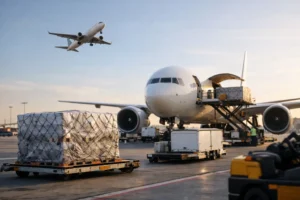
Air freight is built for speed, tighter transit schedules, and higher-value cargo that cannot afford long lead times. Sea freight is built for volume, cost efficiency, and shipments that can move on a longer planning cycle. Both are essential to international trade, but they serve different operational goals.
Air freight usually moves goods within days, subject to flight schedules, customs clearance, and final delivery coordination. Sea freight typically takes weeks, depending on port routing, vessel schedules, consolidation, and inland movement at origin and destination. For companies moving urgent stock, replacement parts, electronics, medical supplies, or seasonal products, those timing differences can shape business performance.
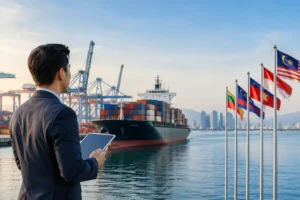
Sea freight, on the other hand, is often the stronger fit for bulk cargo, palletized goods, raw materials, machinery, and routine replenishment orders where landed cost matters more than speed. It gives businesses more room to optimize shipping cost per unit, especially when cargo volume is high.
Speed matters, but so does planning
The most obvious advantage of air freight is time. Faster transit can reduce inventory holding costs, support just-in-time operations, and help businesses respond to sudden demand changes. If a production line is waiting on components or a retail launch has a fixed deadline, air freight can prevent disruption that would cost far more than the premium shipping rate.
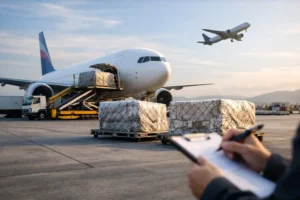
That said, speed is only valuable when the rest of the shipment plan is organized properly. Documentation accuracy, packaging, customs readiness, and pickup coordination all matter. Air freight can move quickly, but if commercial invoices, declarations, or commodity details are incomplete, delays can still happen.
Sea freight requires more lead time, but it rewards disciplined planning. Businesses with stable forecasting often benefit from sea cargo because they can schedule replenishment cycles in advance and avoid paying for urgency. If your supply chain allows longer transit windows, sea freight can improve overall shipping economics.
Cost is not just the freight rate
Sea freight is generally more economical than air freight, especially for heavy or oversized shipments. For many businesses, that cost difference is significant enough to make sea cargo the default mode for regular international movements.
But freight cost should never be reviewed in isolation. A lower ocean rate may be offset by longer inventory cycles, warehousing needs, slower turnover, and the cost of carrying more stock. Air freight may have a higher rate per kilogram, yet still make financial sense if it shortens lead time, accelerates sales, or prevents stockouts.
This is where many shipping decisions go wrong. Teams compare line-item transport cost without looking at the broader commercial impact. The better approach is to assess total logistics cost, including storage, insurance considerations, production continuity, working capital, and customer service risk.
For example, a shipment of fast-moving consumer electronics may be expensive to move by air, but the margin loss from missing a market window could be even higher. By contrast, a large shipment of packaging materials with predictable demand often belongs on a vessel, where unit economics are stronger.
Cargo type often decides the answer
The nature of the goods plays a major role in the air freight vs sea freight decision. High-value, lightweight, urgent, or perishable cargo often fits air freight better. Heavy, bulky, lower-value, or non-urgent cargo usually fits sea freight more efficiently.
Air freight is commonly chosen for electronics, critical spare parts, fashion items with short sales cycles, medical products, samples, and time-sensitive B2B shipments. These categories benefit from speed and reduced transit exposure. Shorter transit can also lower the risk of inventory becoming outdated before it reaches the market.
Sea freight is more practical for furniture, industrial equipment, building materials, raw materials, and large-volume retail stock. It also supports containerized shipping strategies that make sense for recurring trade lanes and planned inventory flow.
There are limits to both modes. Some dangerous goods, battery shipments, oversized cargo, or highly regulated commodities may face mode-specific restrictions, handling rules, or documentation requirements. The right answer is often driven as much by compliance and cargo profile as by budget or timing.
Reliability depends on the route and execution
Businesses often assume air freight is always more reliable because it is faster. In many cases, it is more predictable, but reliability still depends on airline capacity, route conditions, customs processing, and destination handling. During peak seasons or capacity constraints, air rates and space availability can change quickly.
Sea freight can be highly dependable when booked and managed well, especially for recurring cargo flows. However, port congestion, vessel rollovers, transshipment delays, and container shortages can affect timelines. Ocean shipping is usually more exposed to network disruptions simply because the transit window is longer and involves more handling stages.
That is why execution matters as much as mode selection. A well-coordinated freight forwarder helps manage booking strategy, routing, documentation, and contingency planning. For businesses shipping from Malaysia into global markets, this coordination becomes even more important when supply chains involve multiple countries, strict timelines, or mixed cargo profiles.
When air freight is the better business choice
Air freight usually makes sense when delay is expensive. That includes urgent replenishment, product launches, factory-critical parts, short shelf-life goods, and high-value cargo where speed supports revenue or protects operations.
It is also a strong option for businesses that want to reduce inventory exposure. By shortening transit time, companies can hold less stock, respond faster to demand, and improve agility across procurement and fulfillment. For some SMEs, that flexibility is worth more than the freight savings offered by ocean shipping.
Premium service also matters here. When a shipment has tight delivery requirements, businesses need responsive coordination, visibility, and fewer handoff problems. This is where a service-led logistics partner adds real value.
When sea freight is the smarter move
Sea freight is often the right fit when shipment volume is high, planning is stable, and cost control is a priority. It works well for standard replenishment cycles, non-urgent cargo, full container loads, and products with enough margin pressure to make freight efficiency essential.
It also supports scale in a way air freight cannot. If your business is moving large quantities regularly, ocean freight allows better cost distribution across units and helps maintain more competitive landed pricing.
For many companies, sea freight is not the slow option. It is the planned option. When forecasting, supplier scheduling, and purchase timing are aligned, sea cargo becomes a dependable part of a cost-efficient supply chain rather than a compromise.
Many businesses need both
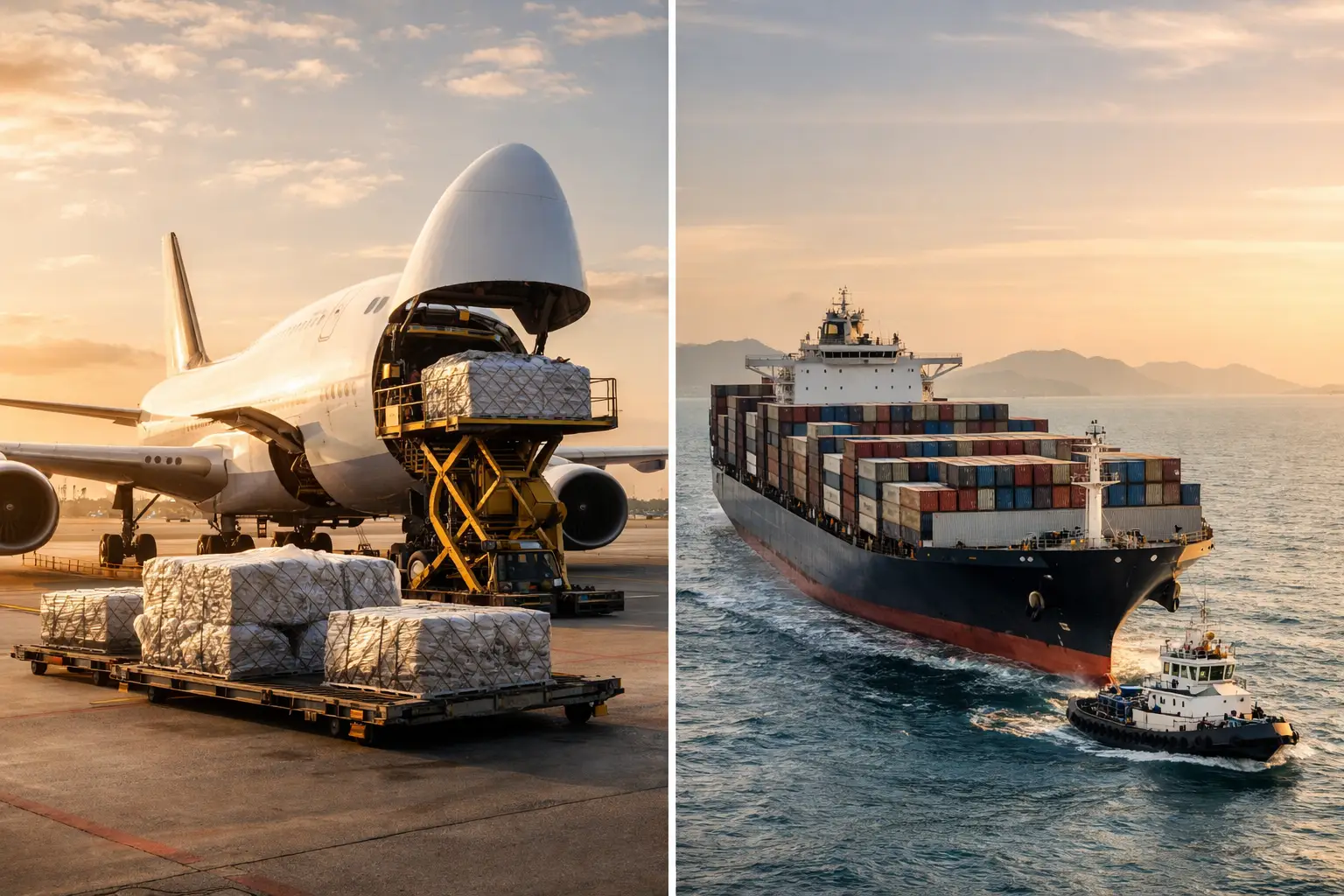
The most effective freight strategy is often not air or sea. It is air and sea, used at the right times for the right shipments.
A company might ship core inventory by sea freight to manage cost, then use air freight for urgent replenishment, high-priority orders, or launch-critical stock. This blended model gives businesses more control over working capital and service levels. It also reduces the risk of relying too heavily on a single mode.
For B2B shippers, this is usually the most practical approach. Different SKUs, customer deadlines, and production cycles rarely fit one shipping method all year. The better question is not which mode wins overall, but which mode fits the shipment’s business purpose.
If you are comparing options, start with four factors: how fast the goods are needed, how much they weigh or cube out, what delay would cost the business, and whether demand is predictable enough to plan around ocean lead times. That framework usually points to the right answer quickly.
A strong freight decision protects more than transit time. It protects continuity, customer trust, and the economics behind every shipment. When those factors are clear, choosing between air and sea becomes far simpler.