When a shipment cannot afford to sit at a port for weeks, the question becomes practical very quickly: what is air cargo services, and is it the right fit for your business? For importers, exporters, manufacturers, and distributors, air cargo services are not just about speed. They are about protecting delivery commitments, reducing downtime, and keeping supply chains moving when timing matters.
What is air cargo services?
Air cargo services refer to the transportation of goods by aircraft through domestic or international trade routes. In business terms, this usually includes more than airport-to-airport movement. It often covers shipment planning, cargo handling, documentation, customs coordination, security screening, airline booking, and final delivery arrangements.
That distinction matters. Many businesses think of air freight as simply putting cargo on a plane. In reality, the service is a coordinated logistics process designed to move commercial shipments from origin to destination with tighter transit times than sea freight and more structure than standard parcel shipping.
For SMEs and corporate shippers, air cargo services are commonly used for urgent replenishment stock, high-value goods, sensitive equipment, spare parts, electronics, medical supplies, fashion items, and time-critical commercial deliveries. The value is not only in transit speed, but in predictability and control.
How air cargo services work in practice
An air cargo movement usually begins with booking and shipment assessment. The freight forwarder or logistics provider reviews the cargo type, weight, dimensions, destination, urgency, and any handling requirements. From there, the shipment is matched to a suitable airline service and routing.
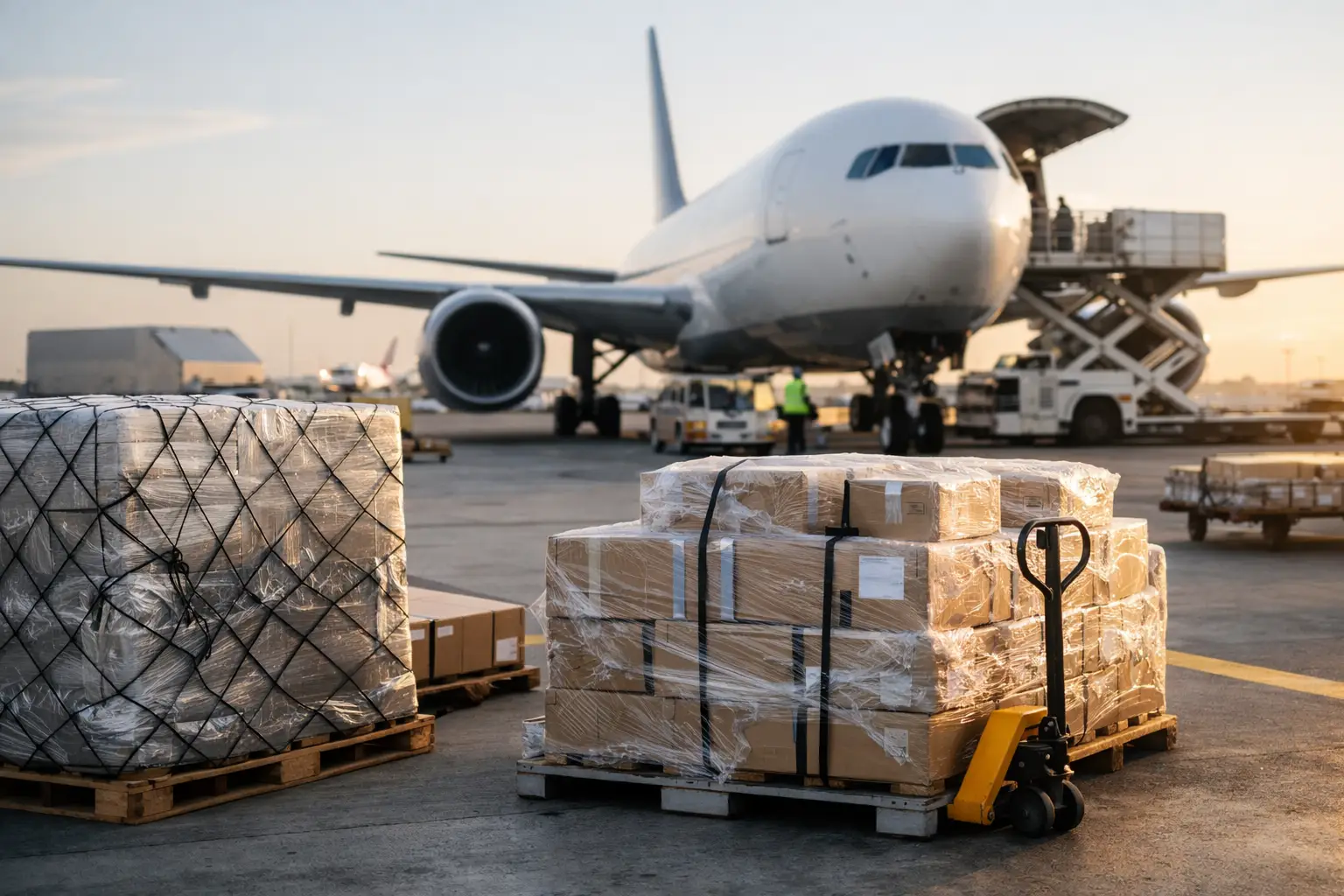
Once confirmed, cargo is collected or delivered to a cargo handling facility, where it is checked, measured, screened, and prepared for export. Shipping documents are processed, customs procedures are managed, and the cargo is loaded for flight departure. After arrival, the shipment goes through import handling and clearance before being released for delivery or collection.
For business customers, the important point is that air cargo services sit at the center of a larger operational chain. A delay in documentation, a misdeclared item, or poor coordination on the ground can affect the shipment just as much as flight availability. That is why service quality matters as much as transport mode.
Airport-to-airport vs door-to-door
Not all air cargo services are structured the same way. Some shipments move on an airport-to-airport basis, where the shipper handles first-mile and last-mile logistics separately. Others are managed on a door-to-door model, where the logistics partner oversees collection, flight movement, customs coordination, and final delivery.
For businesses shipping regularly, door-to-door service often reduces administrative burden and improves visibility. Airport-to-airport can still make sense when the consignee has its own customs broker or local transport arrangement in place. The right model depends on how much internal logistics capability your business already has.
What is included in air cargo services?
The scope can vary by provider, but commercial air cargo services typically include cargo booking, rate management, export packing guidance, consolidation where applicable, customs documentation, security compliance, airline coordination, cargo tracking, import clearance support, and delivery arrangement.
Premium providers may also support special handling for fragile, oversized, sensitive, or high-priority shipments. That can include temperature-controlled cargo, dangerous goods processing, or tighter shipment monitoring for higher-value freight.
This is where businesses should avoid comparing providers on freight rate alone. A lower quoted price may exclude key services that affect transit reliability. If your internal team then has to fill those gaps, the total cost and risk can rise quickly.
When businesses should use air cargo services
Air freight is the right option when speed, timing, or cargo value outweigh the higher transport cost. If a production line is waiting on components, if a seasonal launch has a fixed deadline, or if delayed inventory could lead to lost sales, air cargo can protect the wider commercial outcome.
It is also useful when shipping high-value goods that benefit from shorter transit exposure. The faster the shipment moves through the chain, the lower the chance of prolonged handling delays, storage issues, or inventory disruption.
That said, air cargo is not automatically the best answer for every urgent shipment. If the cargo is very large, low value, or flexible on timing, sea freight may still be the better commercial decision. Many businesses use air freight selectively – for critical items, urgent top-up stock, or launch-sensitive goods – while keeping routine volume on sea cargo for cost efficiency.
The main advantages of air cargo services
The clearest advantage is speed. International air freight can move goods in days rather than weeks, which gives businesses more agility when responding to demand shifts, supplier issues, or customer deadlines.
Reliability is another major factor. While air cargo is not immune to disruption, flight-based transport often provides tighter scheduling than ocean freight, especially on lanes where sailings are less frequent or congestion is common. For businesses managing service-level commitments, that consistency can be more valuable than the transit time alone.
Air cargo services also support better inventory responsiveness. Companies do not always need to hold as much buffer stock when they have access to faster replenishment options. That can help reduce warehousing pressure and improve working capital control, although the freight rate itself remains higher.
Security can also be stronger for certain cargo types. Air shipments move through controlled handling environments with structured screening and documentation requirements. For valuable or sensitive commercial goods, that can be a practical advantage.
The trade-offs businesses need to consider
The most obvious trade-off is cost. Air freight is significantly more expensive than sea cargo on a per-kilogram basis, so the business case needs to be clear. If the product margin is tight or the shipment is not time-sensitive, the premium may not be justified.
Capacity can also be a constraint. During peak seasons, airline space tightens and rates can rise quickly. Businesses that rely heavily on air cargo need strong planning and a logistics partner that can secure allocations effectively.
There are also shipment limitations. Certain goods may face restrictions due to size, weight, battery content, hazardous classification, or special handling rules. In those cases, compliance is not optional. A shipment that is not properly declared can be delayed, rejected, or penalized.
This is why the question is rarely just what is air cargo services. The more useful question is when air cargo makes commercial sense for your shipment profile.
What to look for in an air cargo provider
For business shipping, provider selection should focus on execution strength. That means checking whether the company can manage routing options, documentation accuracy, customs coordination, and delivery follow-through, not simply whether it can issue a freight quote.
Visibility matters as well. Businesses need timely updates, realistic transit expectations, and a clear point of contact when schedules change. Air freight moves quickly, so communication gaps become expensive faster than in slower freight modes.
Experience across multiple shipment types is another advantage. A provider that understands both standard cargo and more complex requirements can help you make better decisions when urgency, cost, and compliance need to be balanced. For companies moving goods from Malaysia to international markets, working with a logistics partner that can also support sea cargo and express shipping adds flexibility when shipment priorities change.
Air cargo services compared with express courier and sea freight
Air cargo services are often confused with express courier, but they are not the same. Express courier is generally designed for smaller parcels and document-style movements under a highly standardized network. Air cargo is better suited to commercial freight that requires more tailored coordination, larger shipment capacity, or freight-forwarding support.
Compared with sea freight, air cargo offers much faster transit and better responsiveness, but at a substantially higher cost. Sea freight remains the better fit for bulk cargo, lower-value inventory, and planned stock movements where timing is less critical.
Many businesses do not choose one mode exclusively. They use a mix. Urgent or premium goods move by air, while routine or high-volume shipments move by sea. That blended approach usually creates better supply chain resilience than relying on one mode for everything.
Why air cargo services matter in real business operations
For operations teams, procurement managers, and supply chain leaders, air cargo services are a tool for controlling business risk. They help reduce the impact of supplier delays, unexpected demand spikes, stockouts, and missed customer deadlines.
They also create options. When a business has access to dependable air freight, it can respond faster to market changes without rebuilding its entire supply chain model. That flexibility is often worth more than the shipment itself, especially in industries where downtime or late delivery carries a high commercial cost.
A capable logistics partner should make that process clearer, not more complicated. For businesses that need premium freight coordination from Malaysia across global trade lanes, Cargovia supports air, sea, and express shipping with a focus on reliable execution and business continuity.
Air cargo services are best understood as a strategic transport option, not just a fast one. When timing, value, and operational pressure align, the right air freight solution can protect revenue, strengthen delivery performance, and keep your business moving without unnecessary friction.