A delayed shipment can disrupt production schedules, miss retail launch dates, or leave urgent customer orders sitting in limbo. That is why many businesses ask, what is air freight logistics, and when does it make commercial sense to use it instead of sea freight or standard courier services?
Air freight logistics is the planning, coordination, handling, and movement of goods by air across domestic or international routes. It covers more than putting cargo on an aircraft. It includes booking capacity, preparing shipping documents, packaging to airline requirements, export and import customs coordination, cargo handling at airports, flight scheduling, tracking, and final delivery arrangements. For businesses shipping time-sensitive, high-value, or commercially critical goods, air freight logistics is a speed-focused transport solution backed by detailed operational control.
What air freight logistics actually includes
In business terms, air freight logistics is an end-to-end process. A shipment starts with cargo readiness at the shipper’s site, but that is only one part of the job. The logistics provider also has to confirm the right flight option, align transit timing with destination requirements, and make sure the cargo complies with airline, airport, and customs regulations.
That process usually includes cargo collection or warehouse receipt, weight and dimension checks, documentation review, export clearance, airport handling, airline uplift, destination arrival handling, import customs support, and delivery to the final consignee. Depending on the shipment, it may also involve temperature control, dangerous goods handling, special security screening, or priority capacity arrangements.
For many SMEs and corporate shippers, the real value is not just flight speed. It is the coordination behind the movement. A fast shipment still fails if documents are inaccurate, if cargo misses a cut-off time, or if the consignee cannot clear goods on arrival.
How air freight logistics works in practice
The process begins with shipment details. A shipper provides the cargo type, dimensions, weight, origin, destination, and required delivery timeline. From there, the logistics provider assesses service options based on urgency, budget, airline availability, and any shipment restrictions.
After booking is confirmed, the cargo is prepared for transport. This stage matters more than many businesses expect. Air shipments are charged by actual weight or volumetric weight, whichever is higher, so packaging design affects cost. Cargo also has to meet handling and safety rules. If it is poorly packed or incorrectly labeled, delays can happen before the shipment even reaches the aircraft.
The next stage is export processing. Shipping paperwork must be completed accurately, including the commercial invoice, packing list, and air waybill. If permits or product-specific declarations are needed, they have to be ready before cargo acceptance. Once customs and security requirements are met, the shipment moves to airport handling and is loaded based on flight schedules and capacity.
At destination, the process continues with unloading, import handling, customs clearance, and final delivery. This is why air freight logistics should be viewed as a controlled transport chain rather than a single flight segment.
What is air freight logistics used for?
Air freight logistics is most often used when time has direct commercial value. That includes urgent replenishment stock, production components, medical supplies, electronics, fashion launches, spare parts, and high-value goods that need tighter transit control.
It is also used when shipment reliability matters more than the lowest freight rate. If a delayed delivery causes lost sales, manufacturing downtime, contractual penalties, or customer dissatisfaction, air freight can be the more economical decision overall. The freight cost may be higher, but the business impact of delay may be much higher still.
That said, air freight is not automatically the right choice for every shipment. Large-volume, low-margin cargo often fits sea freight better. Heavy or non-urgent goods may not justify the premium. The right mode depends on lead time, cargo profile, customer expectations, and the cost of getting it wrong.
Air freight logistics vs courier and sea freight
Businesses sometimes confuse air freight logistics with express courier services because both use aircraft. The difference is scale, flexibility, and shipment structure. Courier services are designed around parcel networks and fixed service models. Air freight logistics is built for commercial cargo, larger consignments, and tailored coordination.
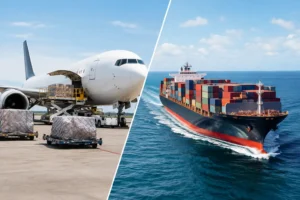
Compared with sea freight, air freight is significantly faster but usually more expensive per kilogram. Sea freight works well for bulk shipments and planned inventory cycles. Air freight works best when speed, lower inventory holding time, or reduced disruption matters more than the freight rate alone.
This is where mode selection becomes a commercial decision, not just a transport decision. Some businesses use sea freight for baseline stock and air freight for urgent top-up shipments. Others switch between the two depending on seasonality, supplier timelines, or customer service levels.
The main components of an air freight logistics service
A professional air freight operation depends on several moving parts working together. Capacity management is one of the most important. Airline space can tighten quickly during peak seasons, and rates can shift with demand, route conditions, and fuel costs. A capable logistics partner does not just quote space. It manages allocation and timing to reduce the risk of missed uplift.
Documentation control is equally important. Errors in product descriptions, values, consignee information, or customs declarations can create avoidable delays. In cross-border shipping, speed without compliance is not a real advantage.
Visibility is another core component. Businesses need to know whether cargo has been accepted, departed, arrived, cleared, and scheduled for delivery. That visibility supports inventory planning, internal communication, and customer commitments.
Finally, there is exception management. Flights change, inspections happen, and cut-off times move. What matters is how quickly those issues are identified and resolved.
Why businesses choose air freight logistics
The first reason is speed, but speed is only part of the decision. Businesses also choose air freight logistics for greater schedule control, shorter inventory cycles, reduced warehousing pressure, and better support for time-sensitive orders.
For importers and exporters managing international supply chains, shorter transit times can improve working capital efficiency. Goods spend less time in transit, which can help businesses respond faster to market demand. That is particularly useful for industries with short product lifecycles, promotional sales windows, or urgent replacement needs.
Air freight can also reduce certain operational risks. Less transit time can mean less exposure to long shipping delays, port congestion, or inventory uncertainty. It does not remove risk entirely, but it can narrow the window for disruption.
The trade-offs businesses should understand
Air freight logistics offers clear advantages, but it comes with cost considerations. Rates are higher than sea freight in most cases, and pricing can rise sharply during peak periods. Shipment dimensions also matter because bulky cargo may be expensive even if it is not especially heavy.
There are also cargo restrictions. Certain batteries, chemicals, liquids, and regulated goods require special handling or may face airline limitations. Some shipments need additional packaging, declarations, or approvals before they can move.
Another factor is route dependency. Not every destination has the same flight frequency or cargo capacity. Direct services may be limited, and multi-leg routing can affect timing. That is why realistic planning matters. Fast mode does not always mean same-day simplicity.
Choosing the right air freight logistics partner
For business shippers, the key question is not only what is air freight logistics, but who can manage it properly. A provider should understand both transport execution and commercial priorities. That means balancing transit speed, cost control, documentation accuracy, and destination coordination.
Look for a logistics partner with strong airline access, experience in customs processes, clear communication, and the ability to handle exceptions without confusion. Businesses benefit most when they work with one provider that can coordinate air freight alongside other transport options, especially when urgency changes from shipment to shipment.
For companies shipping from Malaysia to global markets, that flexibility matters. A provider such as Cargovia can support businesses that need premium air freight as part of a broader shipping strategy, whether the priority is urgent export cargo, recurring commercial shipments, or a mix of air, sea, and express services.
What is air freight logistics for a growing business?
For a growing business, air freight logistics is not just a premium shipping method. It is a tool for protecting deadlines, maintaining customer commitments, and keeping supply chains moving when timing is tight. Used correctly, it helps companies stay responsive without carrying unnecessary complexity internally.
The right approach is to treat air freight as part of a broader logistics plan. Some shipments need the fastest route. Others need the lowest landed cost. The advantage comes from knowing the difference and having a logistics partner that can execute accordingly.
When a shipment is commercially urgent, speed only matters if the entire movement is managed properly from pickup to final delivery. That is where air freight logistics proves its value.