A delayed shipment can stall production, miss a retail launch, or leave customers waiting with no clear answer. That is why understanding what is global shipping matters for any business moving goods across borders. It is not just transport from one country to another. It is the full process of planning, moving, clearing, and delivering cargo through international trade networks.
For importers, exporters, manufacturers, distributors, and e-commerce businesses, global shipping is a business function tied directly to cost control, lead times, and customer satisfaction. When it is handled well, goods move on schedule and decisions become easier. When it is handled poorly, even a small issue at one checkpoint can create larger downstream problems.
What Is Global Shipping?
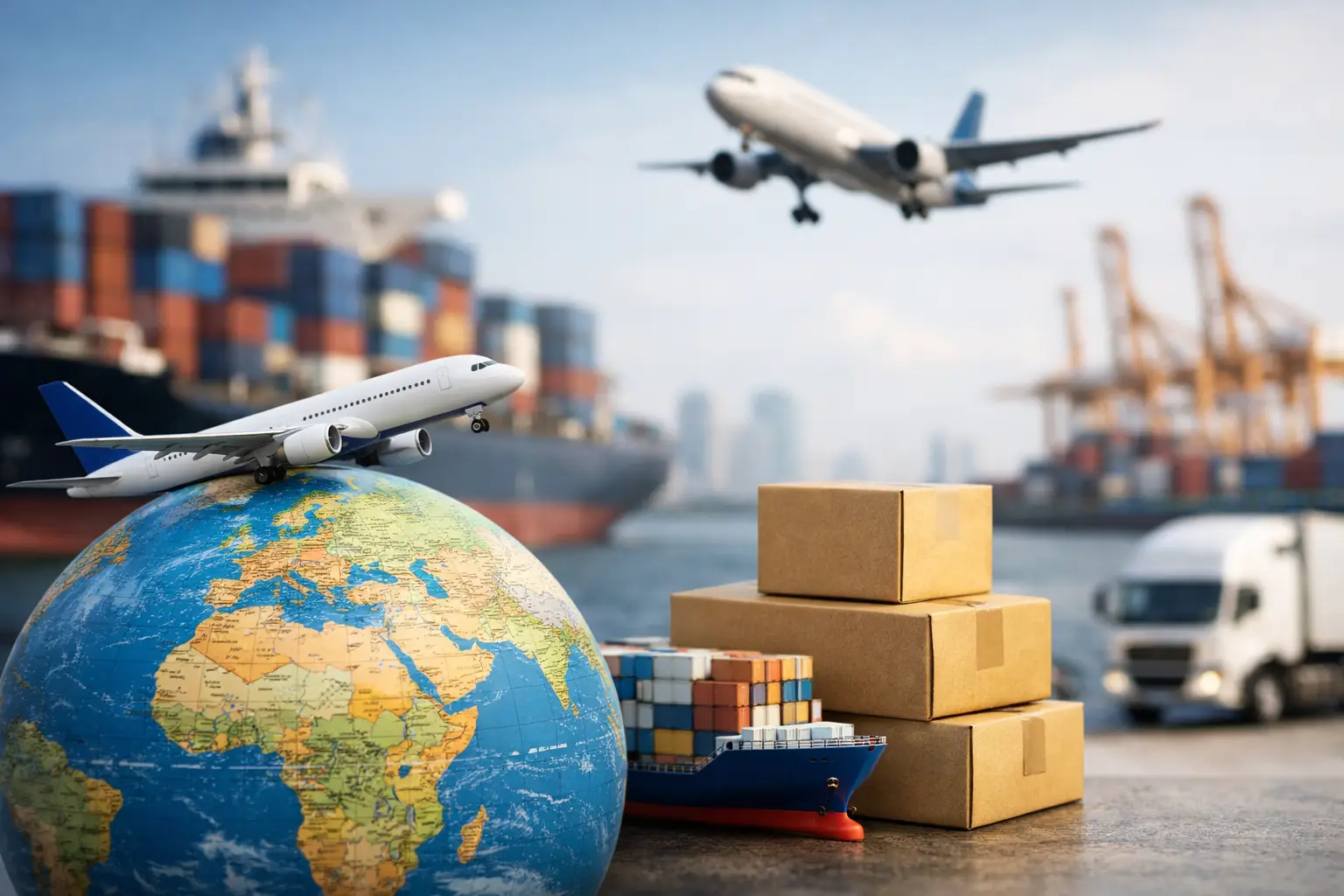
Global shipping is the movement of goods between countries using international transport modes such as air freight, sea freight, and express courier services. It includes more than the physical journey. It also covers cargo booking, packing requirements, documentation, customs clearance, route planning, handling, and final delivery coordination.
In business terms, global shipping is part of supply chain execution. A company may source raw materials from one country, manufacture in another, and sell into several markets. Each movement requires coordination across carriers, ports, airports, customs authorities, and local delivery networks.
That is why businesses rarely view global shipping as a simple shipping task. It is an operational system with cost, compliance, and timing implications.
How Global Shipping Works in Practice
At a high level, the process starts when a business needs to move goods internationally. The shipment must be assessed based on cargo type, dimensions, urgency, destination, and commercial terms. From there, the most suitable transport mode is selected.
If speed is critical, air freight may be the right choice. If the shipment is large and timing is more flexible, sea cargo often provides better cost efficiency. If the cargo is smaller, high priority, or document-driven, express shipment may be more practical.
Once the mode is chosen, the shipment moves through several coordinated stages. Goods are prepared for export, documents are issued, space is booked, cargo is collected or delivered to the terminal, and export customs procedures are completed. After the main transport leg, the shipment goes through import customs clearance and final delivery.
This sounds straightforward on paper, but every lane has variables. Country regulations differ. Carrier schedules change. Cutoff times matter. Packaging standards matter. A strong shipping plan accounts for these details before the cargo moves, not after a delay happens.
The Main Transport Modes in Global Shipping
Air Freight
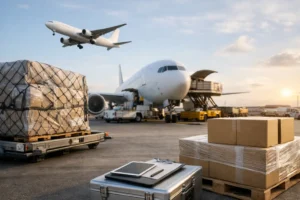
Air freight is used when speed, reliability, and tighter transit windows are the priority. It is common for electronics, medical products, urgent spare parts, retail launches, and high-value commercial goods.
The trade-off is cost. Air freight is significantly more expensive than sea freight, especially for heavy or bulky cargo. Still, for businesses managing urgent replenishment or time-sensitive contracts, the faster delivery window often justifies the higher rate.
Sea Freight
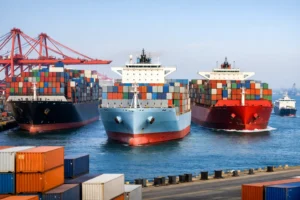
Sea freight is the standard option for larger-volume international shipments. It supports full container loads, consolidated cargo, and a wide range of commercial goods moving across major trade lanes.
Its advantage is cost efficiency at scale. Its trade-off is transit time. Ocean schedules are longer, port congestion can affect timing, and planning needs to happen earlier. For businesses with predictable demand and larger shipping volumes, sea freight remains a core part of international logistics.
Express Shipping
Express services are designed for smaller, urgent international shipments that need fast movement with simplified handling. This is often used for samples, documents, replacement parts, and e-commerce orders.
It is not the right fit for every shipment. Costs can rise quickly with weight and dimensions, and there may be shipment restrictions depending on the product category. But for urgent commercial needs, it offers speed and convenience.
Why Global Shipping Is More Than Transportation
One of the most common misunderstandings is treating global shipping as a carrier booking exercise. In reality, transportation is only one part of the job.
Documentation is a major factor. Commercial invoices, packing lists, airway bills, bills of lading, certificates, and customs declarations all affect whether cargo moves smoothly or gets held up. Small documentation errors can lead to delays, inspections, added charges, or rejected entries.
Customs compliance is another critical area. Every destination market has import rules, product controls, duties, taxes, and declaration requirements. A business shipping internationally needs more than a truck or a flight. It needs coordination that aligns the shipment with regulatory expectations.
Then there is visibility. Businesses need to know where cargo is, when it is expected to arrive, and what action is required if something changes. For operations teams, procurement managers, and supply chain leads, visibility is not a convenience. It supports planning, inventory control, and customer communication.
What Affects Cost and Transit Time
Businesses often ask for a simple rate and a simple transit estimate. In practice, global shipping costs and timing depend on several factors working together.
Shipment size and weight are obvious drivers, but they are not the only ones. Mode selection, route, origin and destination infrastructure, cargo category, fuel costs, customs procedures, and seasonal demand all affect pricing and lead time.
For example, an air shipment may appear expensive at first, but if it prevents stockouts or production downtime, it may protect more value than it costs. On the other hand, sea freight may offer better unit economics, but only if the shipment timeline can absorb a longer transit window.
This is where businesses benefit from a service-led freight approach. The lowest headline rate is not always the best commercial decision. Reliability, shipment handling, schedule stability, and problem resolution matter just as much.
What Businesses Should Consider Before Shipping Internationally
Product Type and Handling Needs
Not all cargo moves under the same conditions. Fragile goods, temperature-sensitive products, dangerous goods, oversized cargo, and high-value items all require different planning standards. The wrong handling method can create damage, non-compliance, or unnecessary cost.
Urgency and Delivery Commitments
A shipment tied to a production line or launch date needs a different transport strategy than a routine replenishment order. Businesses should define the real delivery requirement upfront rather than defaulting to the cheapest or fastest option.
Documentation Accuracy
International shipping runs on document accuracy. Product descriptions, declared values, quantities, and consignee details must align across all paperwork. Errors create avoidable delays.
Customs and Import Requirements
A shipment can leave origin on time and still fail at destination if import requirements are not addressed early. This includes duties, taxes, permits, labeling, and commodity-specific controls.
What Is Global Shipping Support From a Freight Partner?
For most commercial shippers, the practical question is not only what is global shipping, but who manages it well. A freight partner helps businesses choose the right shipping mode, prepare compliant documents, secure capacity, coordinate movement, monitor progress, and manage exceptions.
This matters even more for SMEs and growing companies that do not have large in-house logistics teams. A dependable logistics partner reduces the burden of dealing with multiple service providers across air, sea, and express lanes. It also creates consistency in execution.
For businesses shipping from Malaysia into regional and global markets, that kind of coordination can make a measurable difference. Cargovia supports this need with premium air freight, sea cargo, and express shipment solutions built for commercial reliability rather than one-size-fits-all shipping.
When Global Shipping Gets Complicated
International shipping becomes more complex when businesses scale, enter new markets, or ship mixed cargo profiles. What worked for occasional exports may not hold up once volumes increase or delivery expectations tighten.
A company might need express service for urgent samples, air freight for priority inventory, and sea freight for planned bulk shipments, all within the same supply chain. That is where a flexible shipping strategy matters. Different cargo should move according to business need, not habit.
There is also the issue of disruption. Port congestion, flight capacity shortages, customs exams, and documentation discrepancies are real operational risks. Businesses cannot eliminate every risk, but they can reduce exposure with better planning and stronger execution.
Why the Right Shipping Setup Matters
Global shipping affects sales, inventory, working capital, and service performance. It is operational, but it is also strategic. A business that ships well can respond faster, plan better, and serve customers more consistently across borders.
The goal is not to choose the fastest mode every time or the cheapest route every time. The goal is to match the shipping solution to the commercial requirement with clear control over timing, cost, and compliance.
That is the practical answer to what is global shipping. It is the system that moves business cargo across international markets with the right balance of speed, cost, coordination, and reliability. For companies that depend on cross-border trade, getting that system right is not optional. It is part of running the business well.
If your shipments are becoming harder to manage as volumes grow or timelines tighten, that is usually a sign to review the structure behind them, not just the next booking.